What it does/ How it functions
-
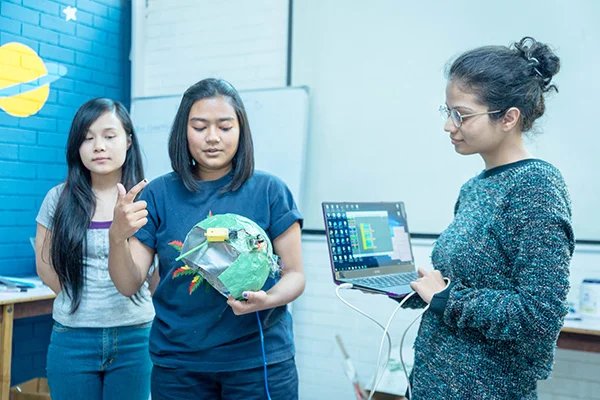
Developed curriculum, lessons, and learning kits for entrepreneurship, innovative thinking, and the 21st century through STEAM education.
-
Designed and set up makerspaces and STEAM labs.
-
Trained cohorts, with an emphasis on increasing female participation in STEAM careers, to mentor students at the American Spaces
-
Provided professional development for American Spaces Staff to familiarize and raise awareness about makerspace programming
Testimonials
Impact through their eyes
-

- Engaging the Youth Forum in Sri Lanka
“American Spaces across Sri Lanka collaborated to organize a 2-day workshop on Digital Storytelling and Ideation for our Youth Forum. Organizing this series of workshops offered us an opportunity for all the American Space Staff in Sri Lanka to work together as a team to implement a program for the first time. Having to facilitate ourselves forced us to self-study and explore more about digital storytelling and ideation. Facilitating this workshop allowed us to identify our own capabilities, strengths, weaknesses and being able to deliver a successful program increased our confidence.
Preparation was easy because of the materials provided on the online module. with our implementing partners and asked them to use them for programs organized in the Spaces. Revisiting the recordings of our sessions to see how Karkhana facilitated the session was very helpful.The Mural tool that we used during this workshop has become popular among our staff and the youth forum team, as we keep using this as an online brainstorming tool. We have shared the online resources
The overall feedback from the participants were also very positive and they were satisfied with the workshop delivery, content, the flow and the methodologies.” - Ashan Gunathalika , American Spaces Colombo
- Danni Dishon, American Spaces Jaffna
- Shanaka Premarathna, American Spaces Matara
- Engaging the Youth Forum in Sri Lanka
-
Exceeding expectations and taking lead
“My first ever experience of what I thought to be a coding program turned out to be a scam! It was a Hackathon Challenge and was promoted to be a skill building program and something related to coding/computing. However it was a craft making and DIY hacks event. I was utterly disappointed. Since then I have been skeptical of all the programs that I hear about.
I had participated in previous programs at American Corner (Bhairahawa) but my interest in coding made it a wonderful experience for me.
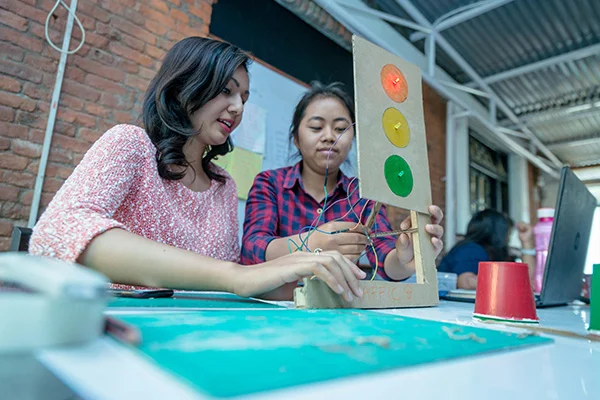
I was really surprised when I could simulate a functioning traffic light using just 4 to 5 lines of codes. A huge takeaway for me from these three days is the realization that learning code is easy and accessible and it’s just another way of thinking to solve problems. I also managed to build a good network with people having similar interests. This network of friends helped me coordinate and communicate for the Arduino Design Challenge (a follow up event) where I had the opportunity to be the Lead Facilitator. I had self-doubts on whether I could take on the role of being the Lead in the program. But through some guidance, I was able to delegate the tasks to the cooperative volunteers. I was able to overcome self-doubts and gain a lifetime worth exposure in the process.
There still is a lot for me to do but I am sure to use the skills I developed through these events in the future.”
-
Evolution of iHUB
I have been involved with innovation HUB (iHUB) since its inception in 2014. The name iHUB was coined as it was always conceptualized as a space to promote innovation. It started out as a library where people could access books and online resources, along with hosting various US Alumni programs and documentary screenings.
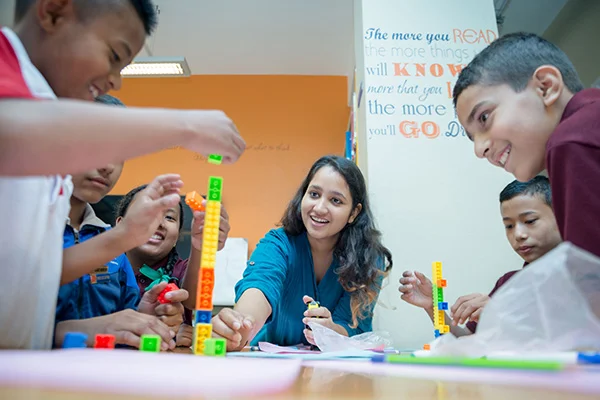
After we established a makerspace in iHUB we have seen a lot more engagement from students interested in technology and DIY projects. The year 2017 saw a lot of visitors that were students of architecture. The makerspace has also allowed us to do more programming with middle and high school students on making centered experiential learning through our partners.
This inspired me to join a M.Ed program in STEAM education during the pandemic. My research paper was focused on how makerspaces sessions promote integrated and experiential learning. During my research I found the need to work with teachers more and have started looking into designing more programs through iHUB that are more teacher focused.
We have recently initiated a program called iEvolve which focuses on skill development in the youth through experiential learning. It encompasses building your soft skills like writing and public speaking, as well as building skills in coding and digital fabrication.
Today, I see iHUB as a space that provides people access to resources (both physical and digital), technology and experiential learning opportunities for contextual skill development. American Space coordinators need to build up their own domain knowledge to be able to understand the needs of their community and identify the right partners to work with to address those needs. It’s important for us to pursue a course of lifelong learning.
Photo Highlights