Who we are
Building Futures Through Learning and Innovation
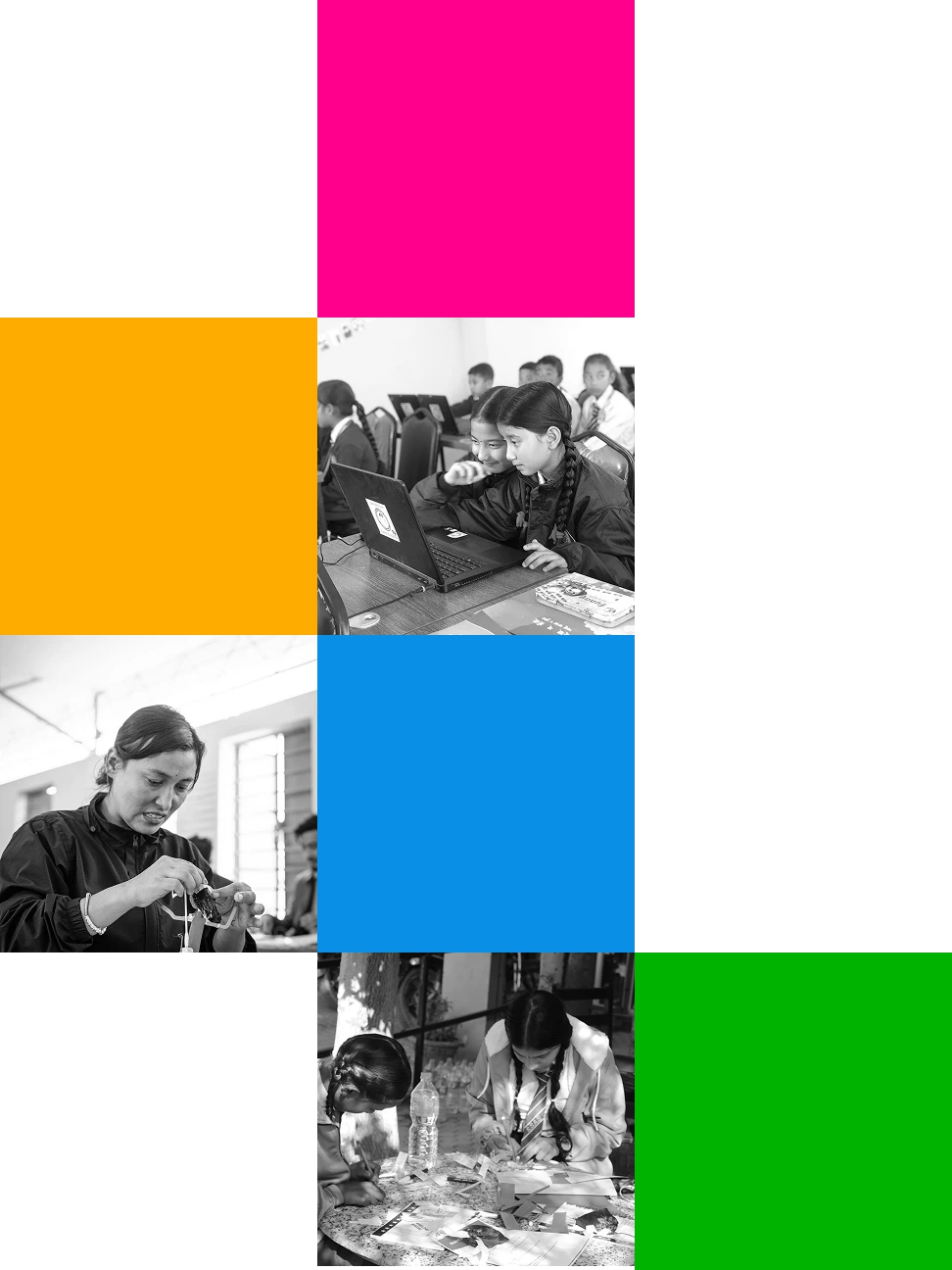
Karkhana Samuha is a Nepal-focused non-profit organization dedicated to nurturing local innovation and empowering people, especially youth to build their own future and the future of their communities.
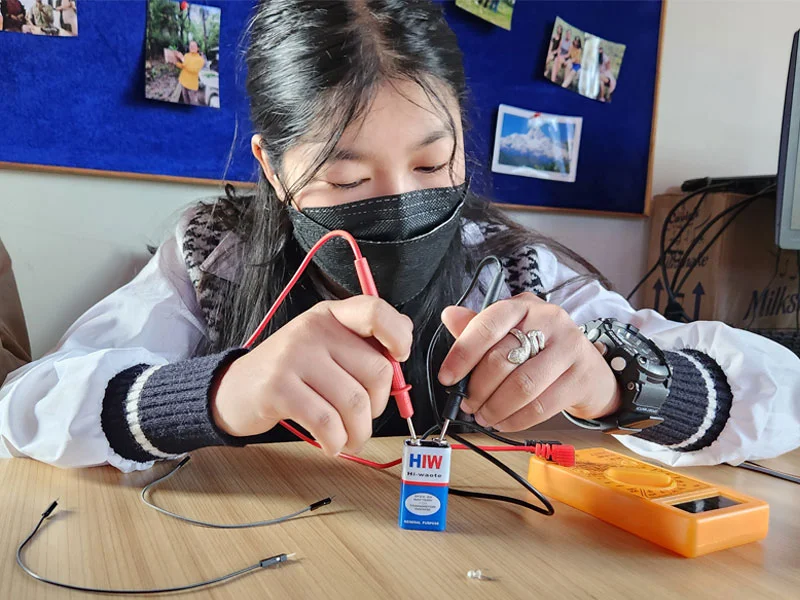

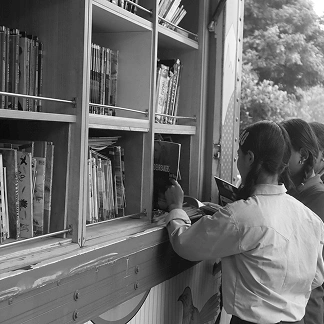


We work at the intersection of education, technology, community engagement, and sustainability, using design thinking, human-centered design, and iterative adaptive management to co-create solutions grounded in local context but with global relevance.
Innovation grows when we learn, collaborate, and adapt, turning ideas into meaningful impact for communities.
Thematic Areas
We use co-creation and design thinking to work under four broad areas (IDEaS)
-
I
Innovative and Inclusive Education
We ensure inclusive and equitable education through innovative learning experiences that enable students to solve problems and express ideas with confidence. -
D
Digital Transformation
We empower Nepali citizens to learn responsibly, create meaningfully, and participate actively in the digital world through accessible technology. -
Eand
Education in Emergencies
We support schools during emergencies and strengthen resilient systems that ensure learning continues without disruption. -
S
Sustainability and Climate Adaptation
We promote sustainable practices and collaborate with experts to contextualize and advance climate action in Nepal.
Our Approach
Our Methods for Inclusive and Meaningful Impact
-
Co-creation
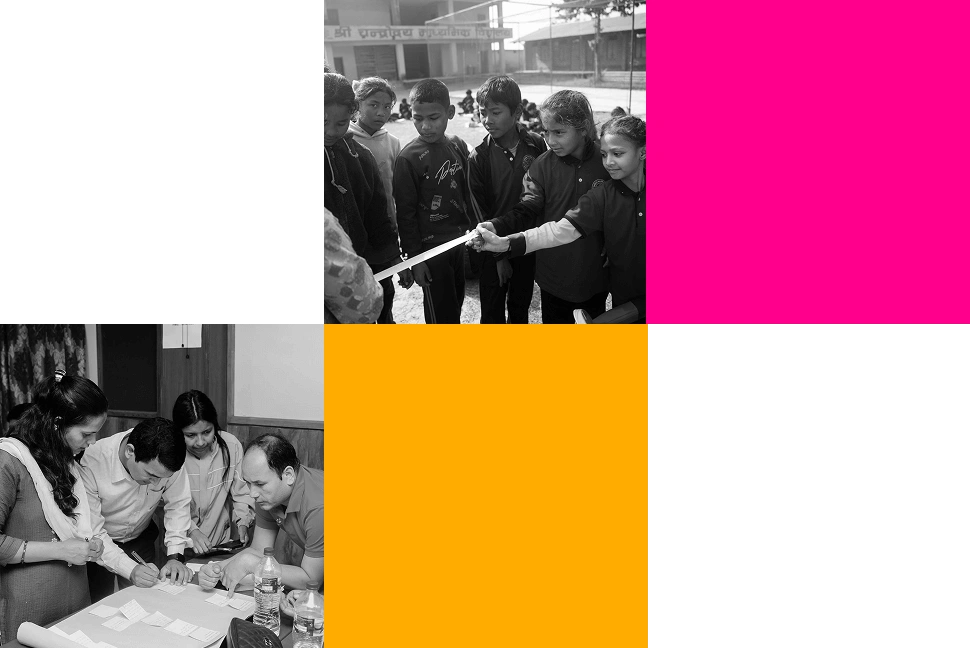
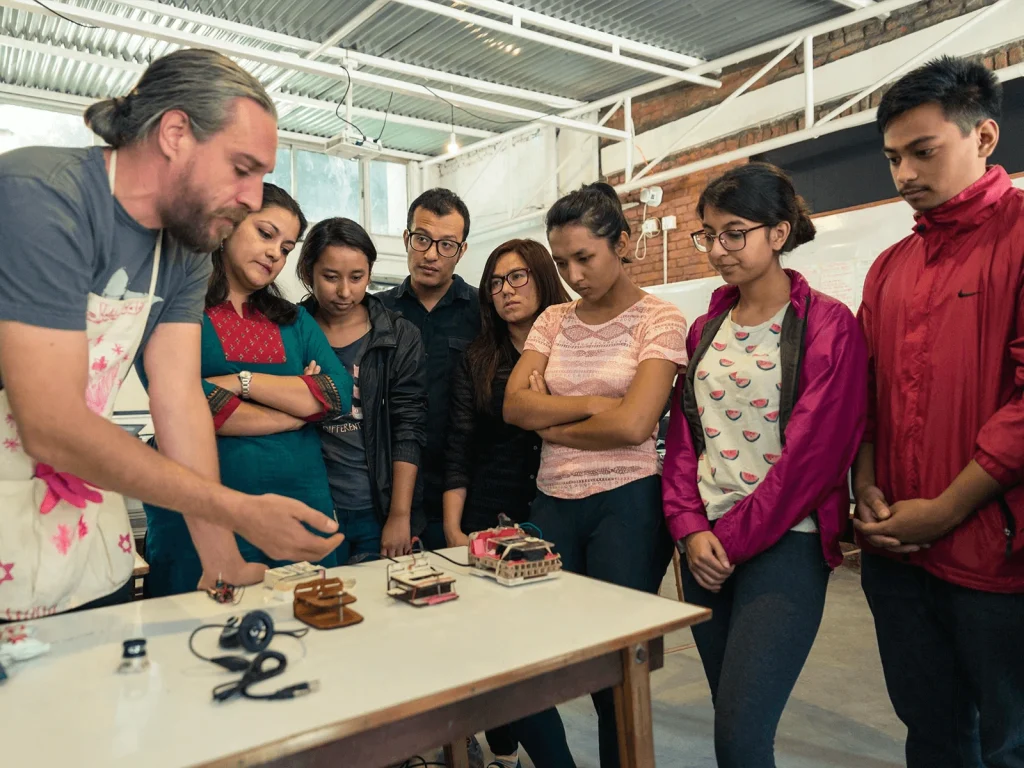
Karkhana Samuha (KS) embraces participatory decision-making and co-design by engaging partners, collaborators, and end users. Using Design Thinking (DT) and Human-Centered Design (HCD) as core methodologies,
KS ensures projects generate innovative ideas and amplify the voices of intended beneficiaries.
Through collaborative and iterative processes, KS identifies effective solutions while also fostering communities of practice to share knowledge, innovate locally, and make a global impact.
-
Adaptive Management
KS applies Result-Based Management (RBM) to define project impacts, outcomes, outputs, and indicators, creating clear linkages for effective resource allocation.
RBM supports both strategy development and monitoring, enabling adaptive management in response to changing project environments.
KS’s Think Make Play Improve (TMPI) approach is an adaptive, iterative, and learning-oriented method. Projects cycle through Think (planning), Make (action), Play (collaboration), and Improve (reflection), gathering insights, responding to context, and adjusting strategies continuously.
-
Policy Coordination
KS actively engages in shaping education and innovation policy. Our team has contributed to several MoEST committees, including STEAM education implementation and COVID-19 response initiatives.
KS members also serve on curriculum and advisory committees at Kathmandu University, the Nepal Army’s national competitions, and NAST, while representing civil society in the Local Education Group (LEG).
Leveraging its position as a bridge between innovative stakeholders and formal policy bodies, KS ensures alternative voices and ideas are represented in education policy processes.
Our Impact
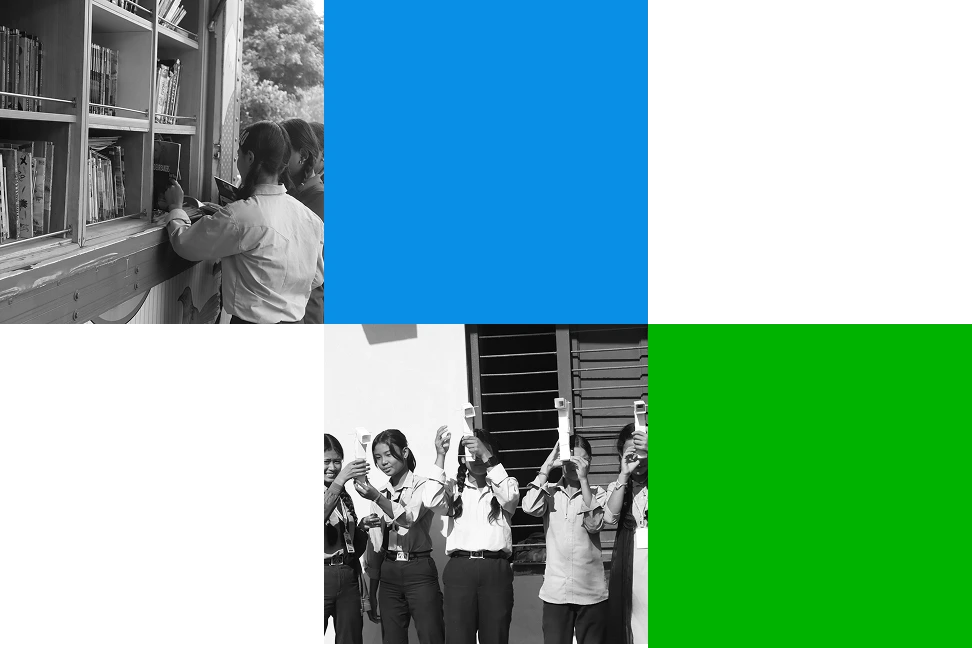
We work to ensure inclusive and equitable quality education through innovation.
-
 46000 +
Learners Reached
Impacting over 46,000 learners with innovative educational resources.
-
 12000 +
Learning Resources Created
Elevating education through innovative resources and support systems.
-
 12 +
12 +Projects Launched
Impacting communities through innovative educational projects.