What it does/ How it functions
-
Fellowship Recruitment and Selection
The project recruited 19 youth fellows (aged 17–24) from Kirtipur through an open social media call and partnerships with the Kirtipur Nagarpalika and Panga Community Library. Selection prioritized diversity, including participants from Janjati communities and the public school system.
-
Intensive Technical Training (Bootcamp)
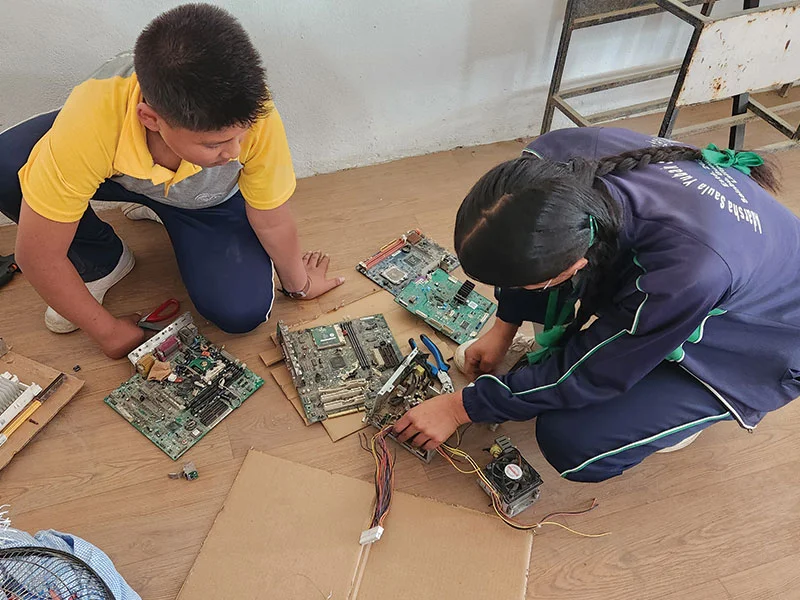
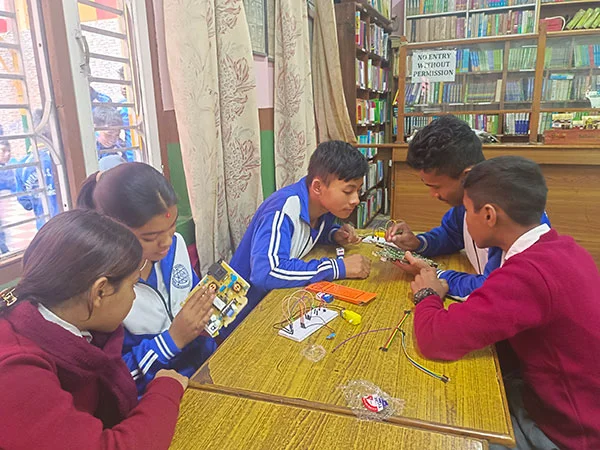
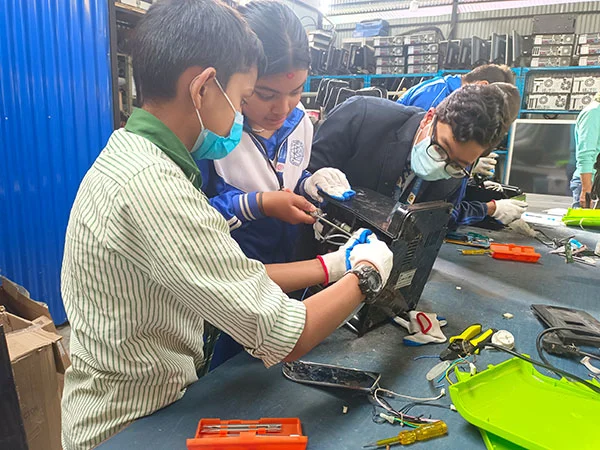
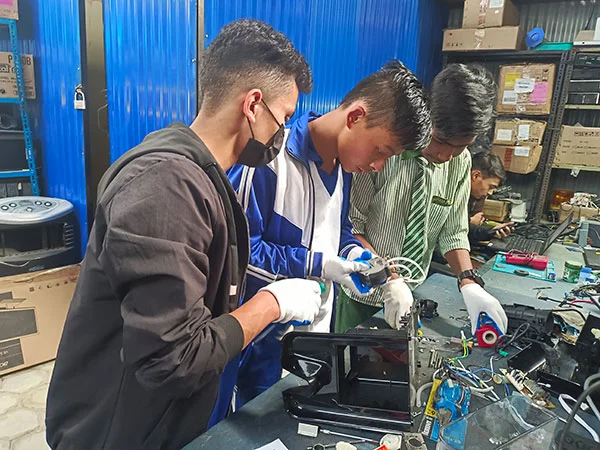
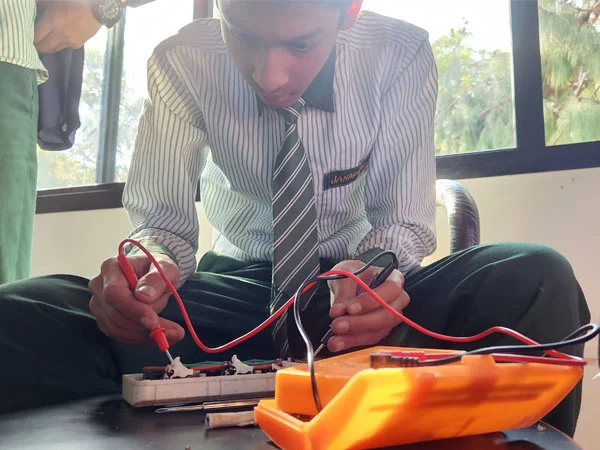
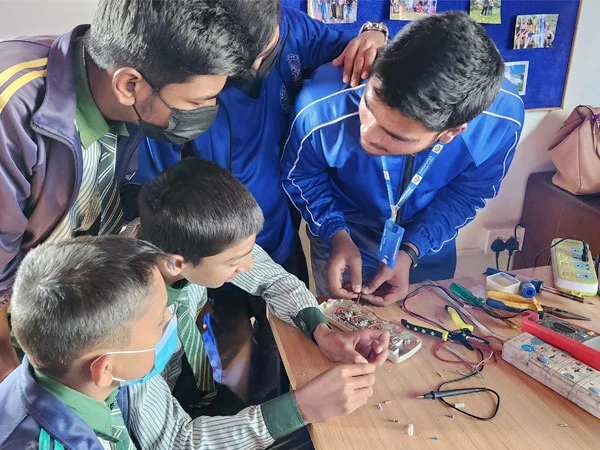
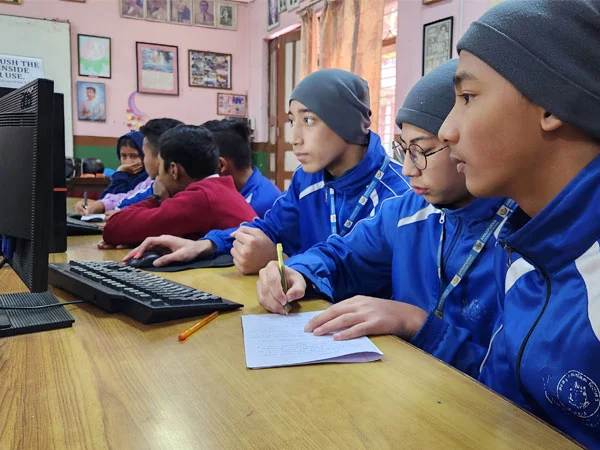
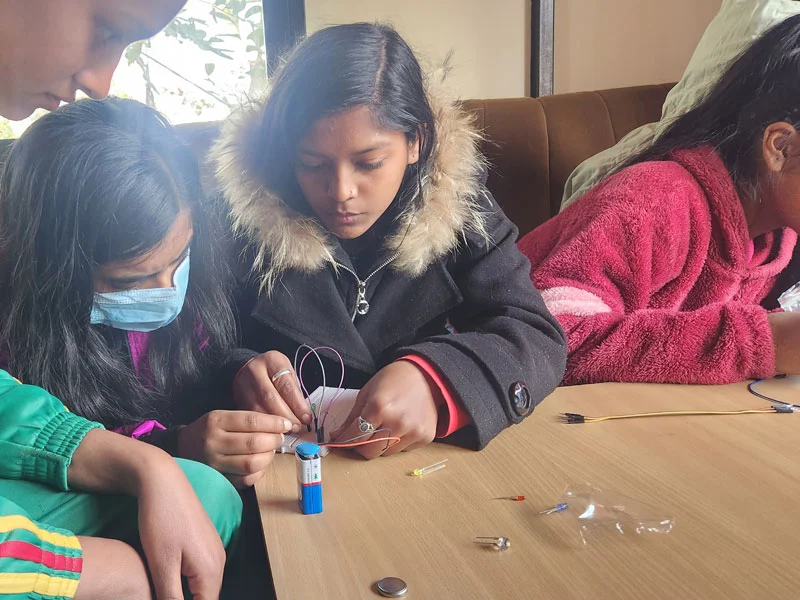
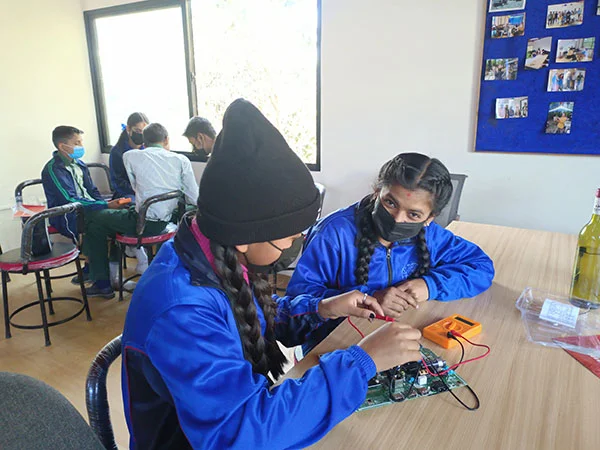
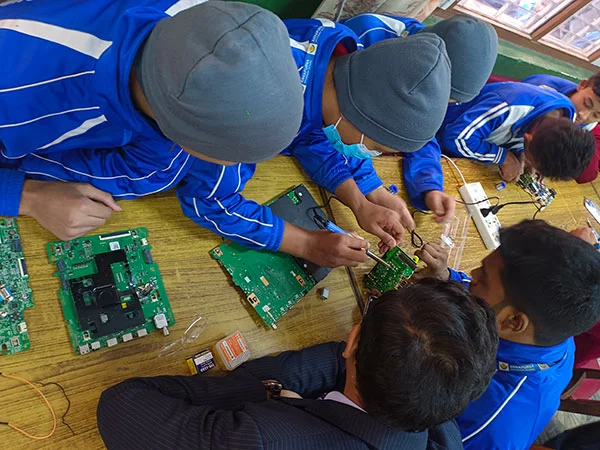
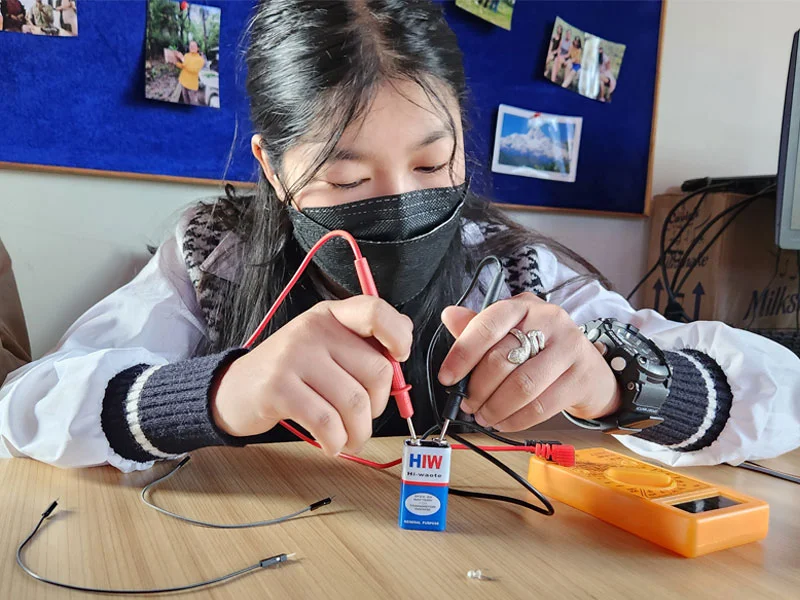
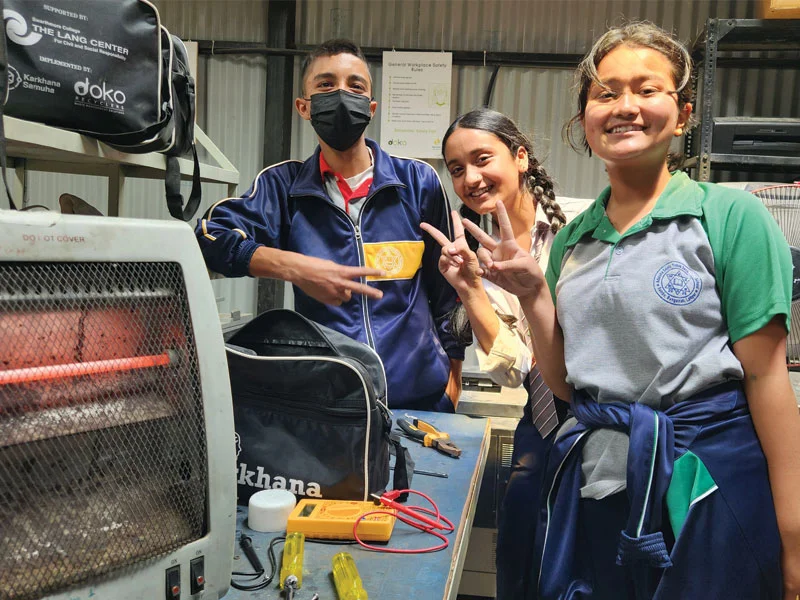
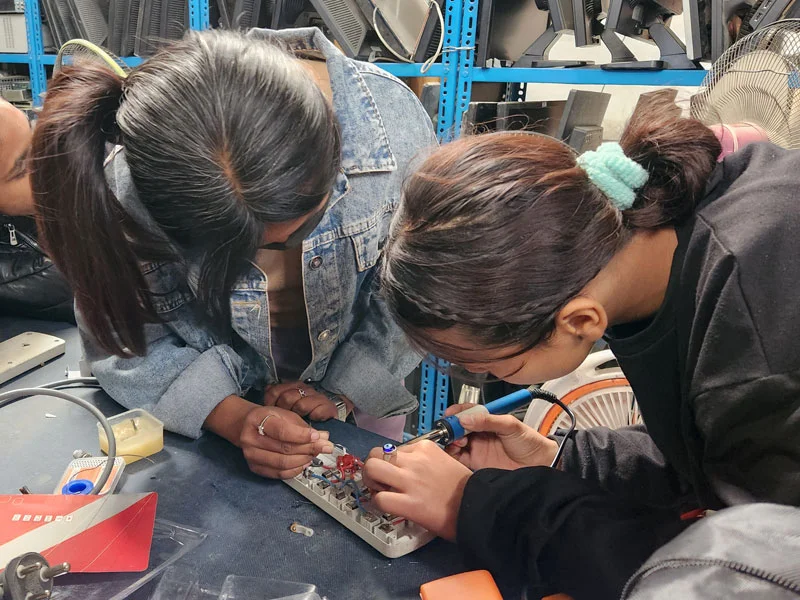
Fellows participated in a 36-hour bootcamp spread over eight weeks. The curriculum integrated technical skills with human-centered design. Participants learned to identify electronic components, use repair tools safely, and perform practical repairs on items such as LED bulbs, electric heaters, and kettles. They also practiced dismantling and salvaging reusable parts from non-repairable electronics.
-
Youth-Led Community Campaigns
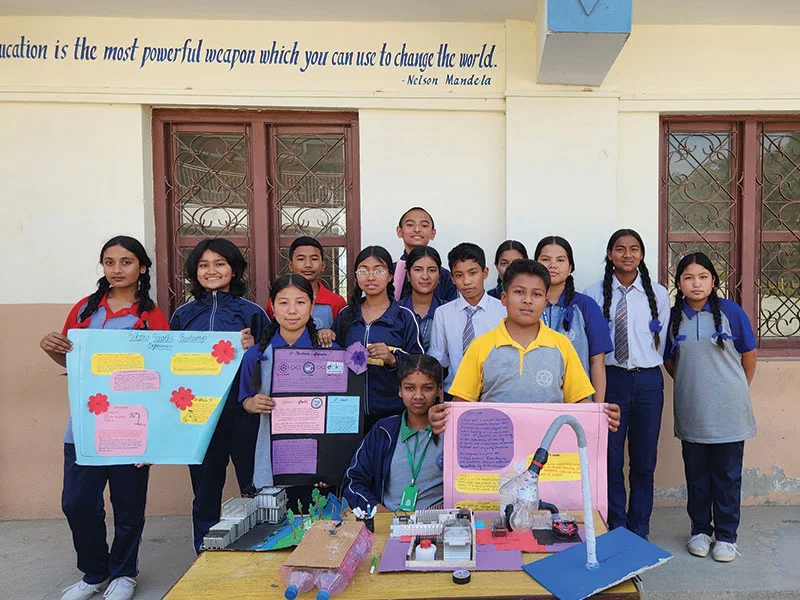
After the training, 14 fellows were selected to design and lead their own advocacy initiatives in three distinct groups:
-
School Outreach
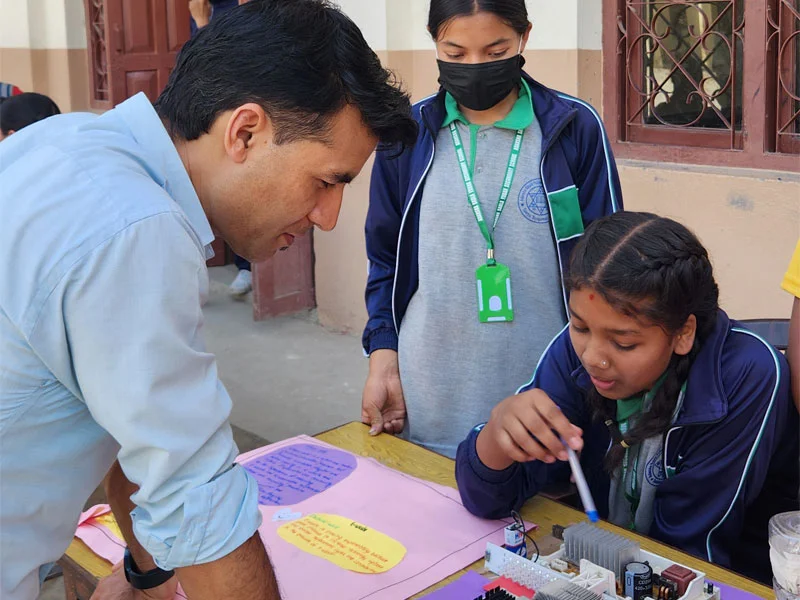
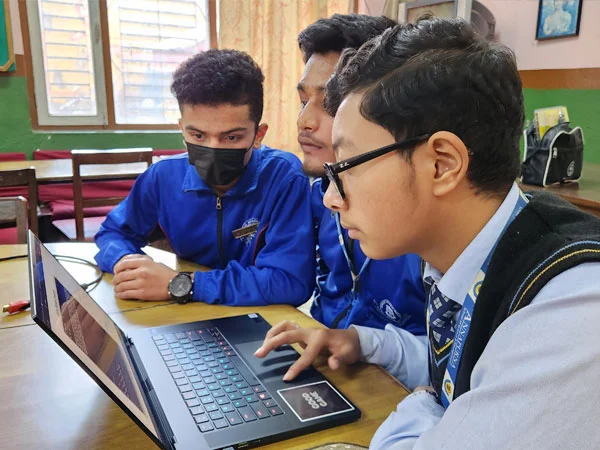
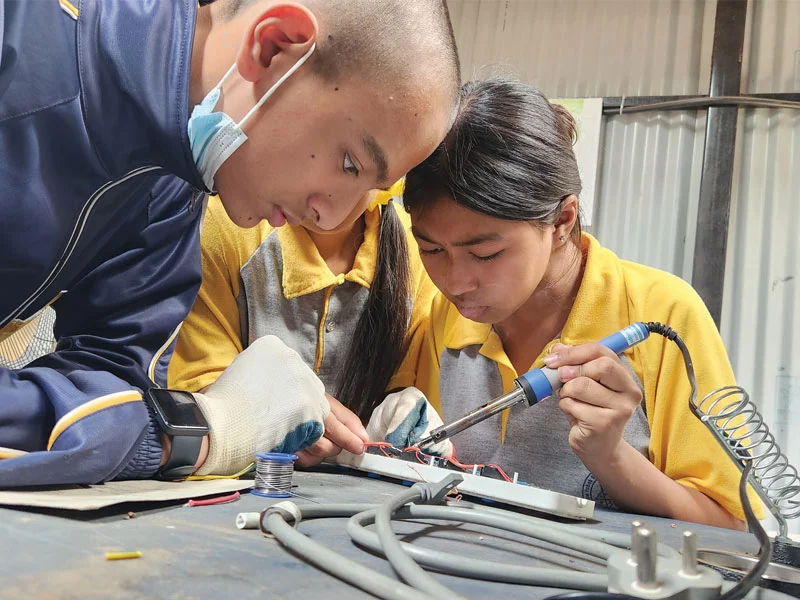
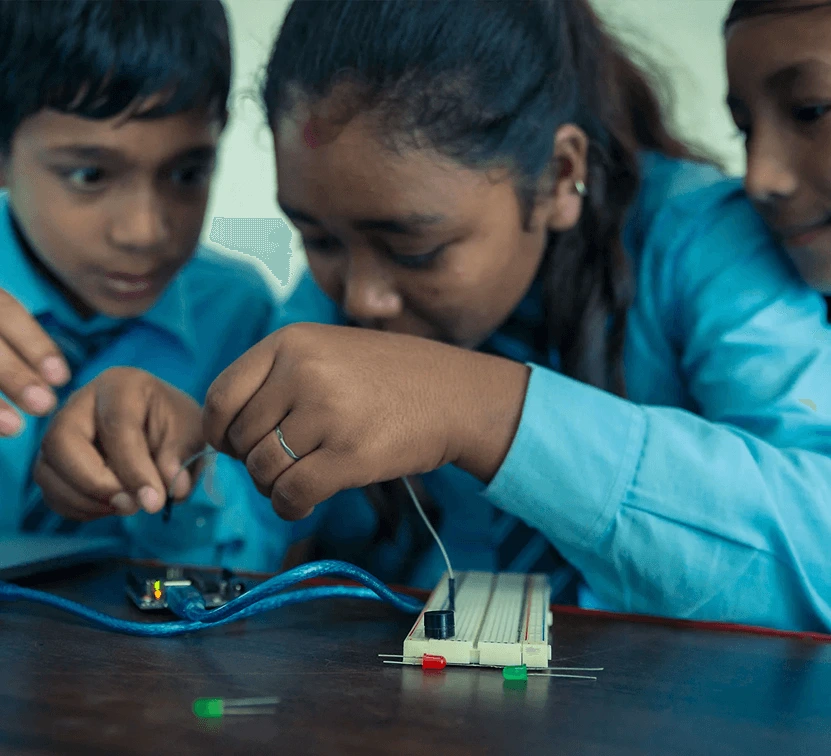
One group conducted week-long repair workshops for 24 Grade 10 students at Janasewa Technical School to equip them with technical skills.
-
Mothers' Group Engagement
Another group focused on 18 participants from “Aama Samuha” (mothers’ groups) in Wards 5 and 8, recognizing their central role in household waste management.
-
Household Research and Advocacy
The third group surveyed 100 households in Ward 10 to analyze e-waste management habits and subsequently submitted a report to the ward chair to advocate for better management infrastructure.
-
Collaborative Advocacy and Closing
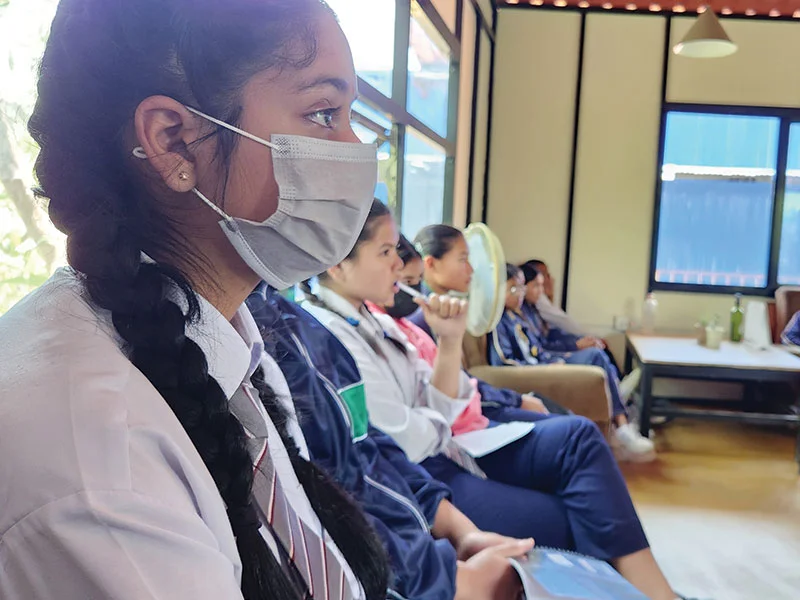
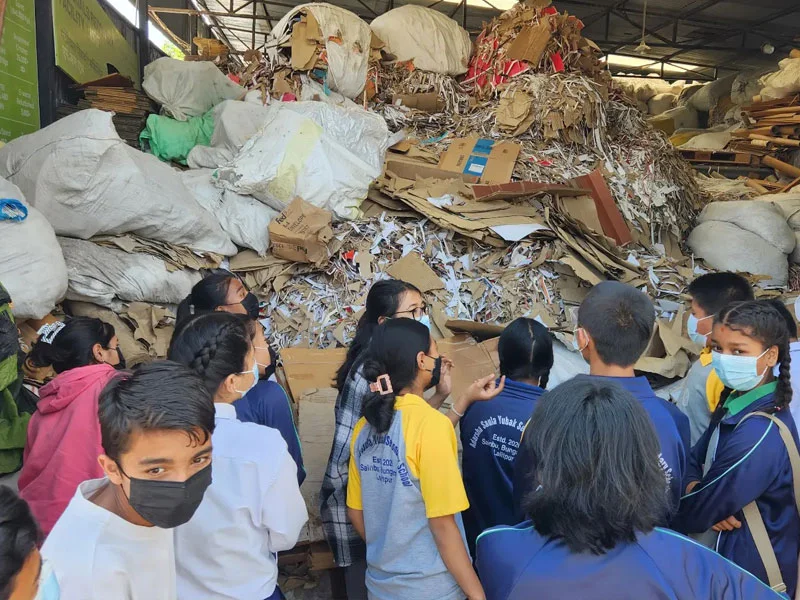
The project facilitated direct engagement between youth and local government officials. It culminated in a closing event on June 22, 2024, which featured a panel discussion with e-waste experts and a practical dismantling session for the 72 attendees to demonstrate the environmental benefits of a repair culture.
Testimonials
Impact through their eyes
-

I always thought e-waste was something related to internet and software development, but to my surprise, it is actually the waste created by discarded electronic devices that we encounter on a daily basis. The Sikaru Saathi fellowship has provided me and my co-fellows with greater insight into e-waste and why it is such a huge problem. Initially, I thought Sikaru Saathi, as the name suggests, would only teach us the basics of electronics and the process of repairing them, but learning about identifying problems in the communities and various ways to tackle them has been a great learning experience.
Being an introvert, I found it difficult to gel with my co-fellows at the outset, but overcoming my internal conflicts and starting a conversation, despite being nervous, has really helped me open up and put my point across.
-
During my participation in the Sikaru Saathi Fellowship, I significantly expanded my knowledge of e-waste repair, developed leadership skills, and enhanced my professionalism. I also improved my ability to coordinate effectively with other fellows and schools, and strengthened my teamwork capabilities.
Conducting my own campaign, I faced challenges such as limited time, scheduling difficulties, and varying levels of knowledge among participants. To address these issues, I took charge of scheduling the sessions and strategically grouped participants with different skill levels together. This approach facilitated peer learning and ensured everyone could progress consistently. Overall, leading the training sessions and awareness programs with SEE graduates was an enriching and valuable learning experience for me.
-
I’m a typical homemaker from Kirtipur, and after seeing my children off to school, I often find myself with some free time. To make the most of it, I participate in workshops organized by our proactive Kirtipur Municipality. I’ve always had a keen interest in expanding my skill set, so I’ve eagerly taken part in various workshops ranging from soap making and MC training to knitting.
This workshop not only broadened my understanding of traditional waste disposal methods but also introduced me to the crucial topic of handling e-waste responsibly. Learning about proper e-waste management was eye-opening and empowering. It equipped me with practical knowledge on fixing and reusing electronics, which has significantly boosted my confidence in being more self-reliant.
Photos